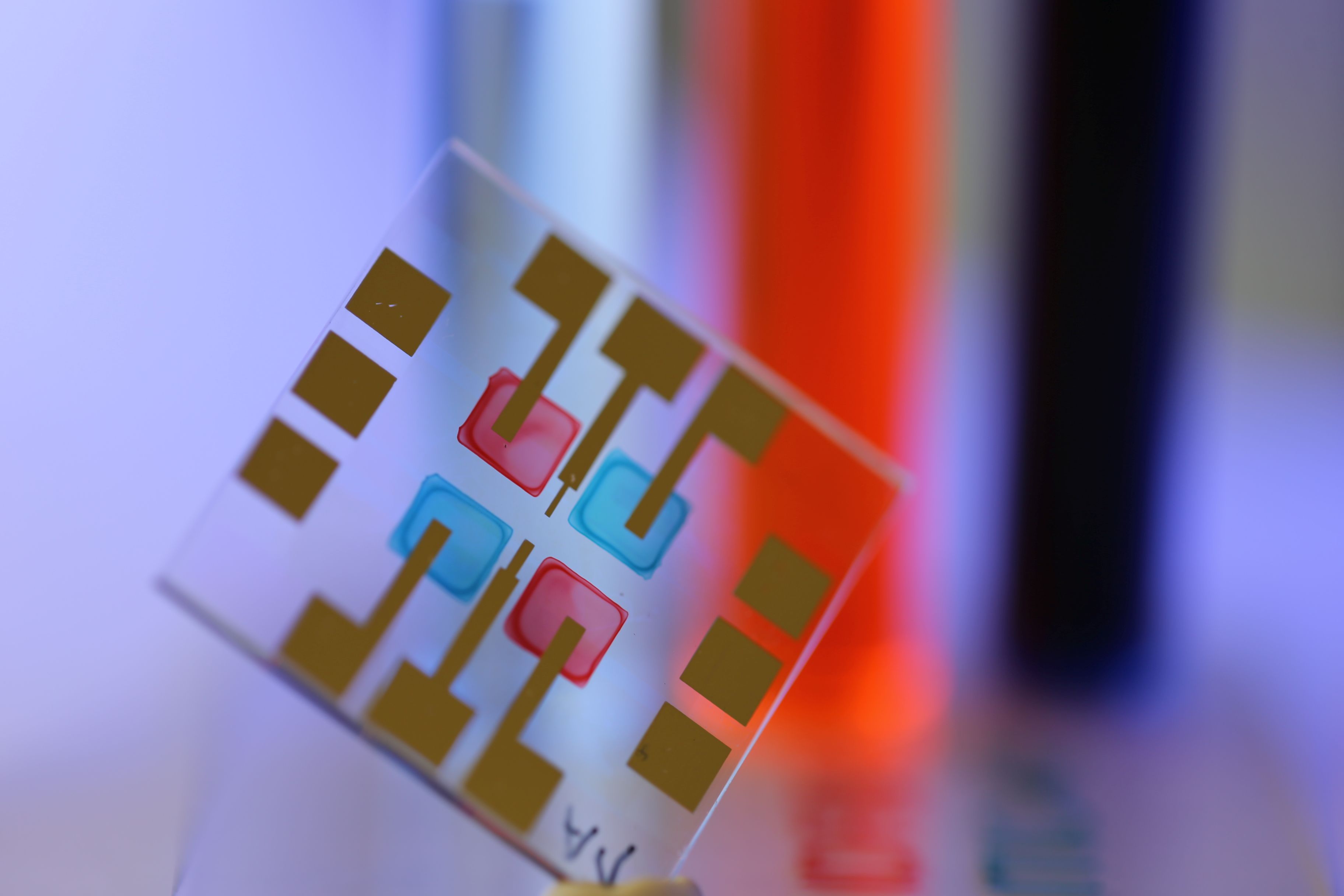
Thermoelectric generators, or TEGs for short, convert ambient heat into electrical energy. They offer a maintenance-free, environmentally friendly, and self-sufficient power supply for the ever-growing number of sensors and devices for the Internet of Things (IoT) and provide a way to recover waste heat. Scientists at the Karlsruhe Institute of Technology (KIT) have now developed three-dimensional component architectures using novel, printable thermoelectric materials. These could represent a milestone for the use of cost-effective TEGs. They report their findings in the journals npj Flexible Electronics (DOI: 10.1038/s41528-020-00098-1) and ACS Energy Letters (DOI: 10.1021/acsenergylett.0c02159).
“Thermoelectric generators can convert thermal energy directly into electrical energy. This technology makes it possible to operate self-powered sensors for the Internet of Things or in wearables—such as smartwatches, fitness trackers, or smart glasses—without batteries,” says Professor Uli Lemmer, director of the Light Technology Institute (LTI) at KIT. Furthermore, they could be used to recover waste heat in industry, heating systems, or geothermal applications.
Read more in the KIT press release


